

Depending on where you live, you may be at greater risk from storm damage. For example, Texas and the Central U.S. have the highest risk for severe connective storms, which include thunderstorms, hail, tornadoes and straight-line winds. Coastal areas are particularly prone to flooding and tropical cyclones. Over the past few decades, storms have become more destructive, so it is important to be prepared for whatever Mother Nature throws your way. Storms come on quickly, so you don’t want to be scrambling around to secure your home when severe weather hits.
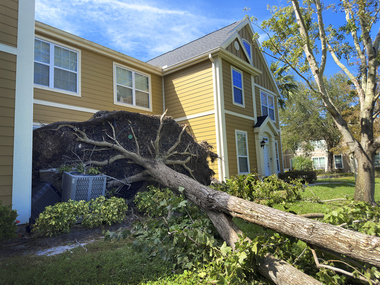
Here are some important steps you can take ahead of time to prepare your home before the storm comes knocking at your door:
Outdoors:
- Make sure that your trees, especially those that overhang your home, are appropriately pruned. In high winds, tree limbs can fall and damage your home, power lines or walkway. It’s best to have a professional arborist come to assess weak or dangerous branches and have them removed right away.
- Check your roof for loose or cracked tiles. In a storm, these could easily fly off the roof and cause damage. Do the same for loose chimney bricks. Clean out any debris from gutters and downspouts to prevent flooding.
- Any outdoor furniture will need to be safely in place during the storm. If you have the room, bring your outdoor furniture to an inside space like a garage or basement. This includes toys, umbrellas, planters and decorations. Any furniture remaining outside will need to be tied down with bungee cords or heavy-duty zip ties.
- Trash bins in the driveway will need to be secured with bungee cords as well. As an additional safety measure, weigh them down with sandbags.
- Check to see if there is any loose siding that could become airborne during the storm. Be sure to close all windows and doors in backyard sheds or garages.
- Secure your car inside the garage until the storm passes.
Indoors:
- Check to make sure that your cellphone, laptops and all electronic devices are fully charged in case of an emergency. Unplug any nonessential electrical appliances.
- Severe storms can cause power outages. You might consider buying a generator, which can power your home in the event of a prolonged power outage. Prices are currently in the $1,000 to $2,000 range and higher depending on the features you choose.
- Close all windows and doors and make sure they are watertight and sealed by applying silicone caulking and weatherstripping. During the storm, stay as far away from the windows as possible.
- If your basement is prone to flooding, consider installing a sump pump. The sump pump will pump water away from the foundation of the house to prevent flooding. Installing a sump pump is not inexpensive as it requires drilling through the concrete foundation to set the pump in place. Figure between $2,500 and $5,000, depending on where you live.
Being prepared well in advance of a storm is the best way to protect your home and your family. Take the time to inspect your home’s interior and exterior to make sure it can weather the next storm.